
Quick Answer: Basement waterproofing cost before a remodel ranges from $1,500 to $30,000 depending on the method. Interior waterproofing (French drain and sump pump installation) typically runs $3,000 to $10,000, while exterior waterproofing with excavation and membrane application costs $10,000 to $30,000. A standalone vapor barrier falls in the $1,500 to $4,000 range. Homeowners in Poolesville, MD and North Chevy Chase, MD with older foundations or clay-heavy soil should budget for waterproofing before any finishing work begins, because addressing water problems after a basement is finished costs 3 to 5 times more than doing it right the first time.
Why Basement Waterproofing Cost Before a Remodel Is the First Number You Need to Know
Here is a conversation we have all the time with homeowners: they come to us excited about turning their basement into a home theater, a guest suite, or a workout space. They have a vision, they have a budget, and they are ready to go. Then we ask one question that changes everything: “Has this basement ever had water issues?”
Understanding basement waterproofing cost before a remodel is not just a line item on your budget. It is the single most important number that determines whether your entire investment holds up or falls apart five years from now. We have seen homeowners skip this step to save money, only to tear out $40,000 worth of finished walls and flooring two years later because moisture crept in behind the drywall.
So let us walk through exactly what waterproofing costs, which method you actually need, and why this is the one place you absolutely cannot cut corners.
The Three Main Types of Basement Waterproofing (and What Each One Costs)
Not every basement needs the same level of protection. The right approach depends on where your water is coming from, how much of it there is, and what your foundation looks like. Here is the honest breakdown of each method.
Interior Waterproofing: $3,000 to $10,000
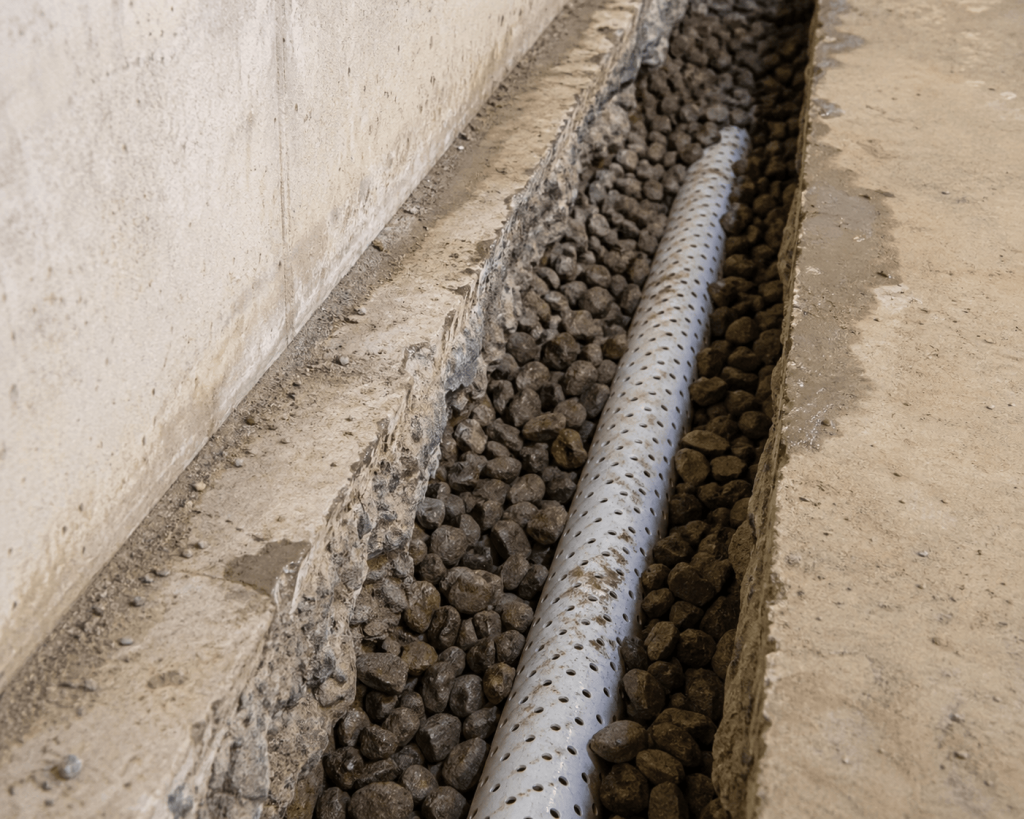
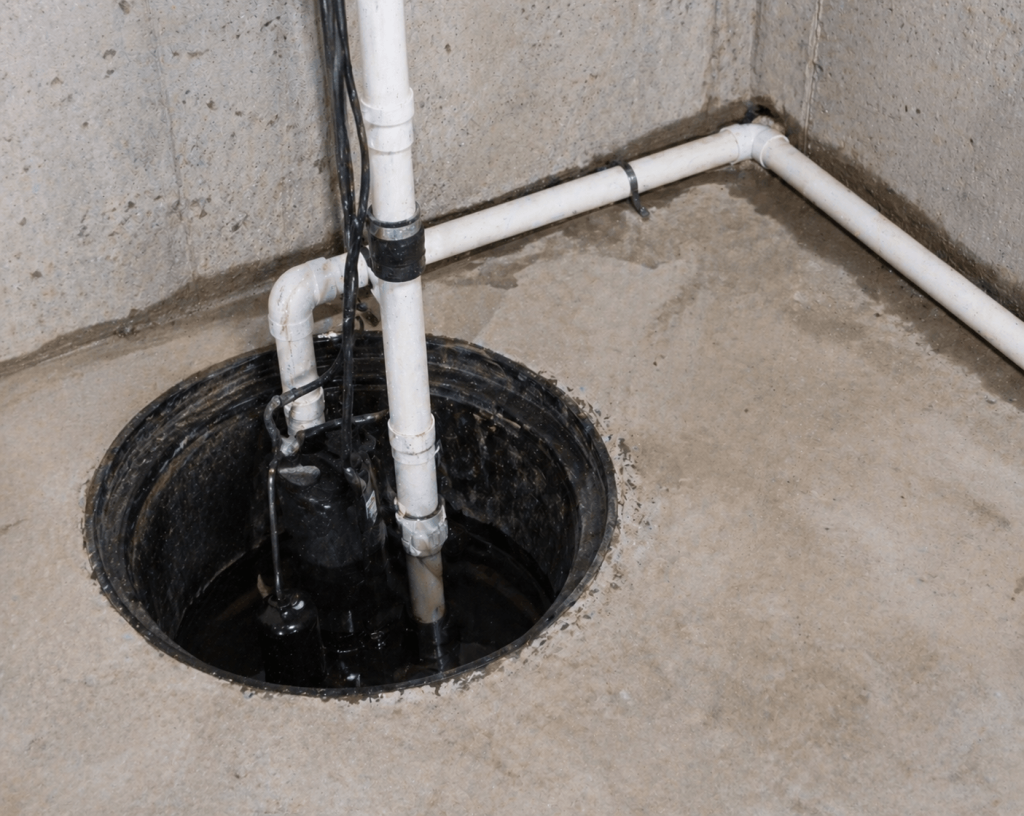
This is the most common solution we see for basements that get occasional water intrusion. Interior waterproofing typically involves installing a French drain system around the perimeter of the basement floor, routing that water to a sump pump, and pumping it out and away from the foundation.
For a standard 1,000 square foot basement, expect to pay $3,000 to $7,000 for a basic French drain and sump pump setup. If your basement is larger, has multiple problem areas, or needs a battery backup sump pump (which we always recommend, by the way), you are looking at closer to $8,000 to $10,000.
Interior waterproofing does not stop water from reaching your foundation walls. It manages water once it gets inside. Think of it like a well-designed gutter system for the inside of your basement. It works well for most situations, and it is far less disruptive than exterior methods.
Exterior Waterproofing: $10,000 to $30,000
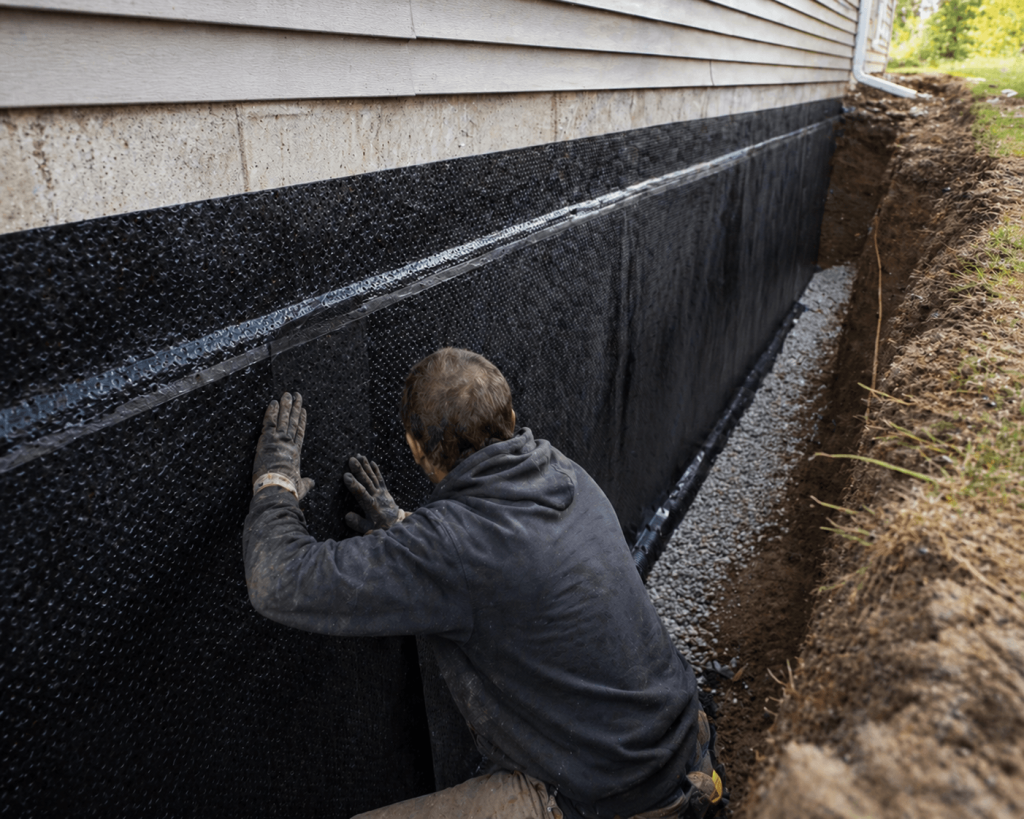
Exterior waterproofing is the heavy hitter. This involves excavating around the outside of your foundation, applying a waterproof membrane or coating directly to the exterior walls, and installing drainage tile at the footing level to redirect water before it ever touches your basement.
The price tag reflects the labor intensity. Excavation alone can cost $5,000 to $15,000 depending on how deep your foundation is, whether there are landscaping features, porches, or driveways in the way, and the soil conditions on your property. Homes in areas like Poolesville, MD that sit on heavier clay soil often require more careful excavation work, which adds to the cost.
Exterior waterproofing is typically reserved for serious, chronic water problems or new construction. If your basement has significant cracking, bowing walls, or water pouring in during every heavy rain, this may be the only real solution.
Vapor Barriers: $1,500 to $4,000
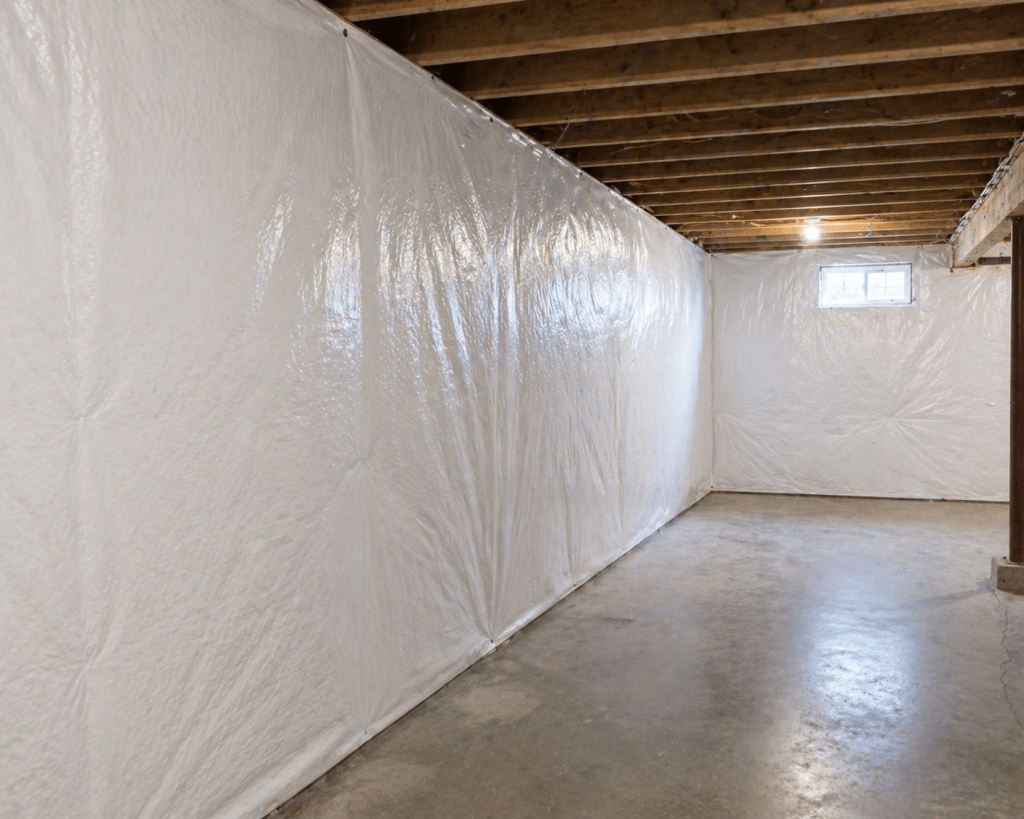
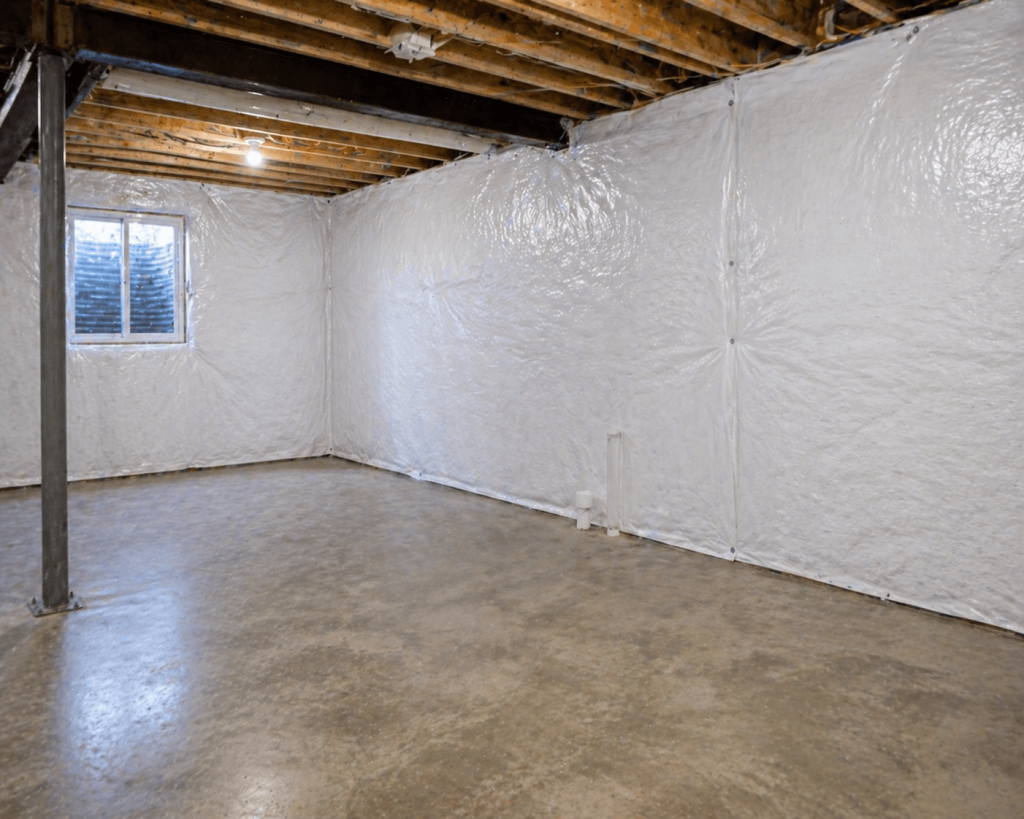
A vapor barrier is a thick plastic sheeting (usually 6 to 20 mil) that is installed along basement walls and sometimes the floor to prevent moisture from migrating through the concrete. This is not a fix for active water leaks. It is a solution for dampness, condensation, and that musty smell that so many basements have.
For most basements, a professionally installed vapor barrier runs $1,500 to $4,000. This is often combined with a dehumidifier ($200 to $500 for a good residential unit) to keep humidity levels below 50%, which is the threshold where mold starts to become a concern.
What Drives the Cost Up (or Down)?
The ranges above are broad, and there is a reason for that. Several factors swing the price significantly. The size of your basement is the obvious one: a 600 square foot space costs less to waterproof than a 1,500 square foot space. Foundation condition matters too. Older homes with stone or block foundations need more prep work than poured concrete.
Soil type plays a bigger role than most people realize. Clay-heavy soil (common throughout central Maryland) holds water against your foundation like a sponge. Sandy or loamy soil drains naturally and creates fewer problems. The severity of your water problem also matters: a basement that gets damp in heavy rain is a different project than one with standing water every spring.
Accessibility is another factor. If the exterior of your foundation is blocked by a deck, patio, mature landscaping, or a driveway, exterior waterproofing becomes significantly more expensive because those features may need to be removed and replaced.
Why Skipping Waterproofing Before a Remodel Is the Most Expensive Mistake You Can Make
We need to be blunt about this because we have seen it too many times. Fixing water issues after your basement is finished costs 3 to 5 times more than addressing them beforehand. That is not an exaggeration.
Here is why. If water gets behind your finished walls, the drywall absorbs it and becomes a breeding ground for mold. Mold remediation alone can cost $2,000 to $6,000. But before you can even address the mold, you have to demolish the finished walls to access the foundation. Then you waterproof. Then you rebuild everything you just tore out. We have seen homeowners spend $25,000 to $40,000 fixing what would have cost $5,000 to $8,000 if they had done it before finishing.
One homeowner we worked with in North Chevy Chase, MD had finished their basement beautifully: custom built-ins, LVP flooring, a full bathroom. Two years later, a heavy spring rain exposed a crack in the foundation they had covered with drywall. The repair required gutting about 40% of the finished space. It was heartbreaking, and it was completely avoidable.
How to Tell If Your Basement Actually Needs Waterproofing
Not every basement needs full waterproofing, and a good contractor will be honest with you about that. Here are the signs that waterproofing should happen before you start any finishing work.
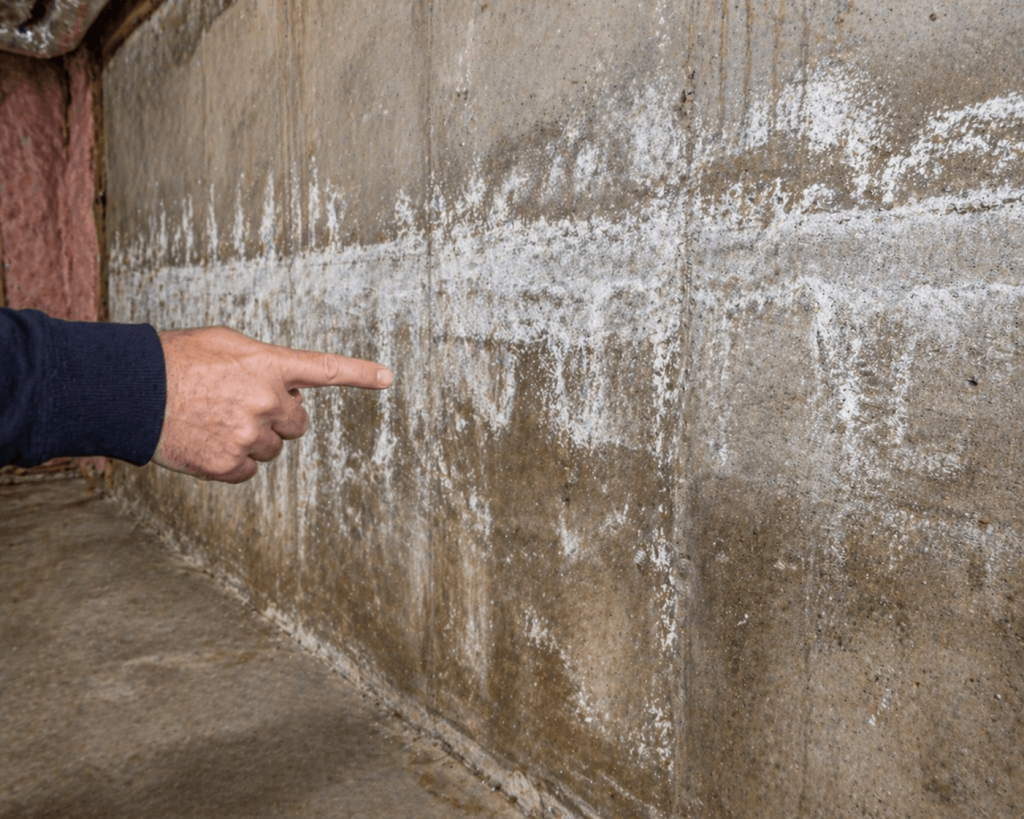
Look for visible water stains on walls or floors, white mineral deposits (called efflorescence) on the concrete, musty odors, peeling paint, or any evidence of past water pooling. If you see cracks in the foundation walls wider than a hairline, that is a red flag. A consistently humid basement (above 60% relative humidity) is another indicator, even if you have never seen standing water.
A simple test: tape a 12-inch square of plastic wrap flat against your basement wall and leave it for 48 hours. If moisture collects on the wall side of the plastic, water is migrating through the concrete. If moisture is on the room side, you have a condensation issue that a dehumidifier or vapor barrier can solve. This takes two minutes and can save you thousands in guesswork.
Basement Waterproofing Cost Before Remodel: What Maryland Homeowners Should Expect
Maryland presents some specific challenges when it comes to basement water management. The state gets about 40 to 45 inches of rain per year, the water table can be high in low-lying areas, and much of the soil in the central part of the state is heavy clay that does not drain well on its own.
For most homes in the greater Maryland area, interior waterproofing in the $4,000 to $8,000 range is the sweet spot. That gives you a French drain system, a quality sump pump with battery backup, and the peace of mind that your finished basement will stay dry. If you are in an area with known high water tables or if your home is more than 40 years old with an original foundation, budget closer to $8,000 to $12,000 to account for additional drainage work or crack repair.
Should You Hire Separate Companies for Waterproofing and Remodeling?
This is a question we get a lot, and the honest answer is: it depends. Some remodeling contractors handle waterproofing in house or have a trusted waterproofing partner they work with regularly. Others focus only on the finishing side and expect you to handle waterproofing separately.
There are advantages to using a single contractor who manages both. Scheduling is smoother, there is one point of accountability, and the waterproofing work is done with the finishing plan in mind (for example, placing the sump pump where it will not interfere with your future layout). On the other hand, specialized waterproofing companies may offer longer warranties on their work, sometimes 20 to 25 years or even lifetime transferable warranties.
Whichever route you take, make sure the waterproofing is fully complete and inspected before any framing, insulation, or drywall goes up. There should be zero active moisture issues before the finishing crew starts.
How Long Does Waterproofing Take Before You Can Start Finishing?
Interior waterproofing (French drain and sump pump) typically takes 2 to 3 days for a standard basement. Exterior waterproofing takes 5 to 10 days depending on the scope of excavation and weather conditions. A vapor barrier installation is usually a 1 to 2 day job.
After the waterproofing system is installed, most contractors recommend waiting at least 2 to 4 weeks before starting finishing work. This gives you time to monitor the system through at least one good rain event and confirm everything is working properly. Rushing into finishing right after waterproofing is like putting on a cast before confirming the bone is set. Give it time.
Questions to Ask Before You Spend a Dollar on Waterproofing
Before you sign anything, here are the questions that separate a thorough contractor from one who is just trying to sell you a system. Ask what is causing the water issue specifically, not just “you need a French drain.” Ask whether interior or exterior waterproofing is more appropriate for your situation and why. Ask what warranty comes with the work and whether it is transferable if you sell the home. Ask how many similar projects they have completed in the last year. And ask whether they will provide a moisture test after the work is done to confirm the system is performing.
A good waterproofing company will answer all of these without hesitation. If they get vague or try to pressure you into signing on the spot, that is your sign to get another estimate.
The Bottom Line on Basement Waterproofing Cost Before a Remodel
Understanding your basement waterproofing cost before a remodel is not optional if you want your investment to last. Interior systems run $3,000 to $10,000, exterior systems run $10,000 to $30,000, and vapor barriers run $1,500 to $4,000. The right approach depends on your water source, foundation type, and soil conditions.
The most important takeaway is this: waterproofing done before finishing costs a fraction of what it costs after. Every dollar you spend on proper waterproofing upfront protects the tens of thousands you are about to invest in your finished basement. Do this first, do it right, and you will not regret it.