
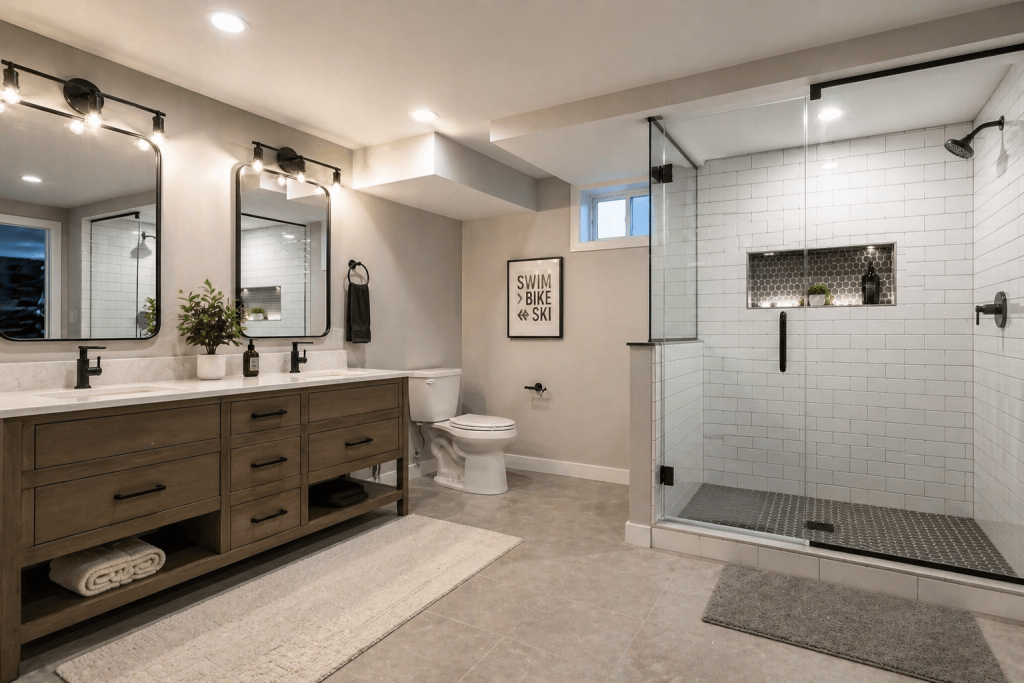
Quick Answer: Adding a bathroom to your basement typically costs $8,000 to $25,000 for a half-bath and $15,000 to $40,000 for a full bathroom with a shower or tub. Most basement bathrooms require a sewage ejector pump ($1,000 to $3,000) because the plumbing sits below your home’s main sewer line. Rough-in plumbing alone runs $2,000 to $5,000 depending on how far the new bathroom is from existing drain lines. Homeowners in Fulton, MD and University Park, MD consistently report that a basement bathroom delivers the strongest value boost of any basement feature, often recouping 60 to 70% of the investment at resale. This article covers every plumbing, permit, and cost factor so you can plan your project with confidence.

If you’re finishing your basement (or even just thinking about it), one of the first questions that comes up is whether to add a bathroom down there. And right behind that question is the big one: how much does it cost to add a bathroom to your basement?
It’s a fair question, and honestly, the answer depends on a handful of factors that can swing your budget by thousands of dollars in either direction. We’ve helped homeowners across Maryland navigate this exact decision, and the truth is that basement bathroom costs are more predictable than most people think, once you understand what goes into the project.
Let’s walk through everything so you can plan with real numbers instead of guesswork.
What Does It Really Cost to Add a Bathroom to Your Basement?
Half-Bath vs. Full Bath: The Price Difference
A half-bath (just a toilet and sink) is the more affordable route, typically running $8,000 to $25,000. A full bathroom with a shower or tub costs $15,000 to $40,000. The gap comes down to the extra plumbing, waterproofing, tile work, and ventilation that a shower or tub requires.
For a lot of homeowners, a half-bath is enough if the basement is primarily a hangout space or home office. But if you’re adding a guest bedroom or planning to use the basement as an in-law suite, a full bath is almost always worth the investment.
What’s Included in Those Numbers
Those price ranges typically cover demolition (cutting into the concrete slab), plumbing rough-in, electrical work, drywall, flooring, fixtures, paint, and finishing touches. What they don’t always include are permit fees, the ejector pump, or upgrading your water heater to handle the additional demand. More on those below.
The Sewage Ejector Pump: The Cost Most People Don’t See Coming
Why You Probably Need One
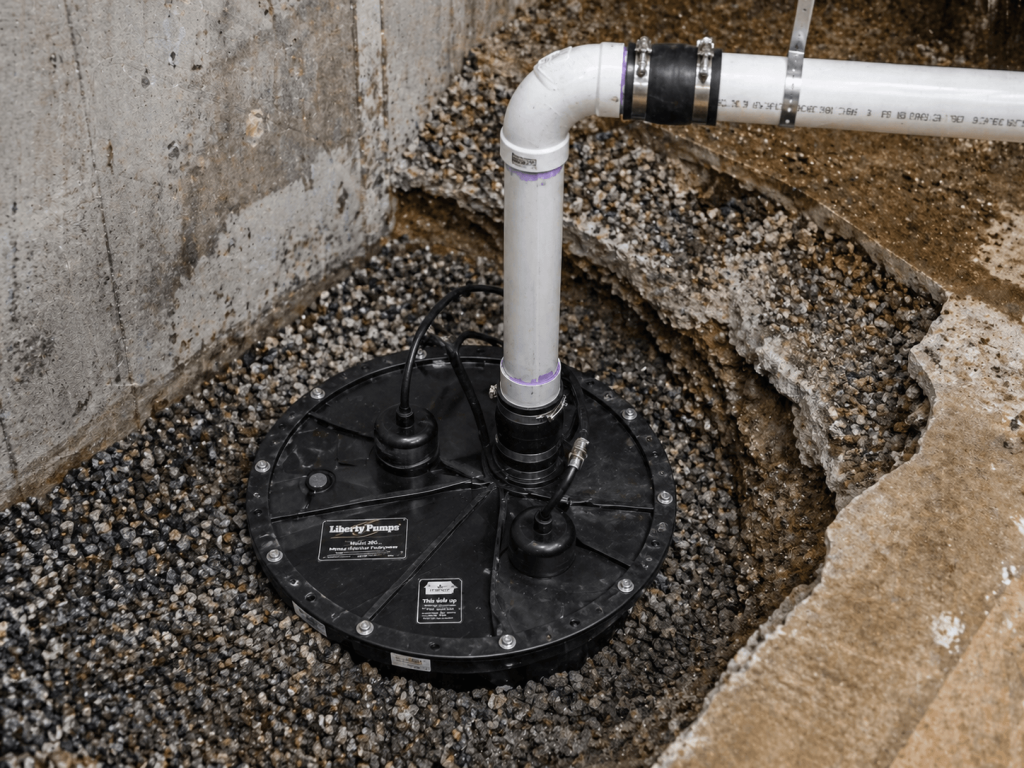
Here’s a detail that catches a lot of homeowners off guard. Because your basement sits below the main sewer line that exits your house, gravity can’t do the work of moving waste from a basement toilet or shower up to the sewer. That’s where a sewage ejector pump comes in. It collects waste in a sealed pit and pumps it up to the main drain line.
Almost every basement bathroom needs one. The only exception is if your home’s sewer line exits at a depth lower than your basement floor, which is rare in Maryland.
What It Costs (and Why It’s Worth It)
A sewage ejector pump typically costs $1,000 to $3,000 installed, depending on the pump quality and how much concrete cutting is needed to set the pit. We’ve seen homeowners in Fulton, MD try to skip this to save money, and it’s one of those decisions that always comes back to bite you. Without it, you simply don’t have a functioning bathroom. It’s a non-negotiable line item.
Rough-In Plumbing Costs for a Basement Bathroom
What “Rough-In” Actually Means
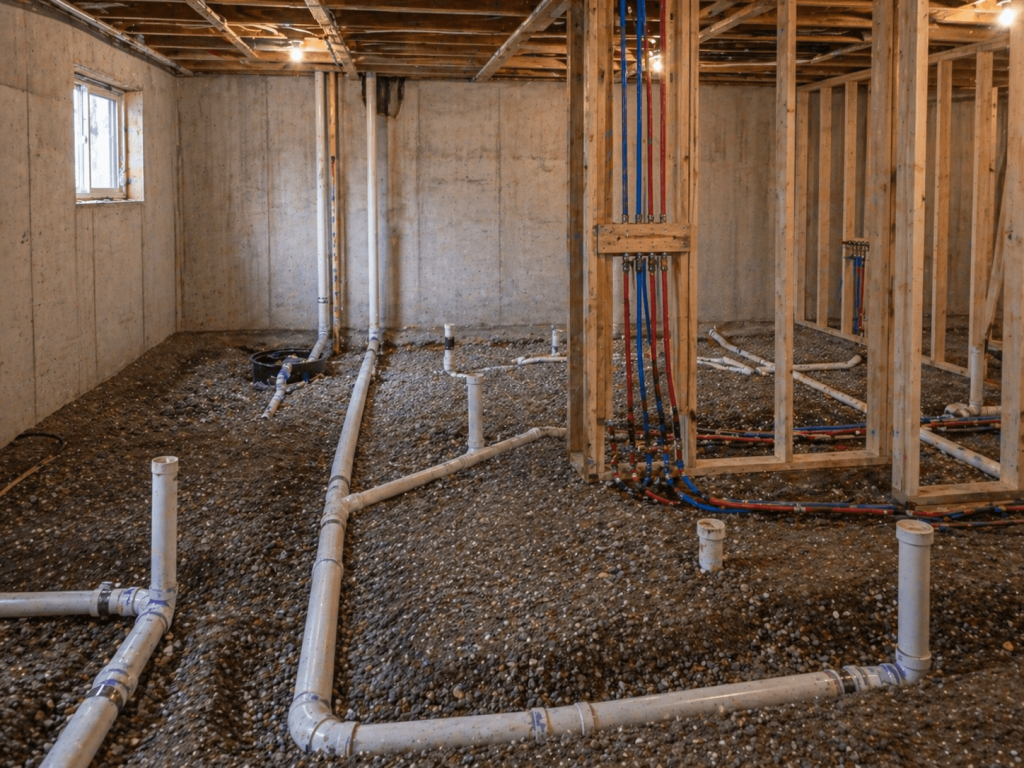
Rough-in plumbing is the behind-the-scenes work: running the drain lines, water supply lines, and vent pipes before any walls go up or fixtures get installed. Think of it as the skeleton of your bathroom’s plumbing system. This stage requires cutting into your concrete slab, which is part of why basement bathrooms cost more than adding a bathroom on an upper floor.
Factors That Drive Rough-In Costs Up or Down
Rough-in plumbing runs $2,000 to $5,000 for a basement bathroom. The biggest factor is distance from existing drain lines. If your new bathroom is directly below or near a first-floor bathroom, the plumber has a shorter run and the cost stays lower. If you’re building on the opposite side of the basement, expect to pay more for the extra pipe, labor, and concrete work.
The age of your home matters, too. Older homes in areas like University Park, MD sometimes have cast iron drain lines that need to be replaced with PVC during the project, which adds $500 to $1,500.
Permits, Inspections, and Code Requirements
What Maryland Requires
Any time you’re adding plumbing and electrical work, you need permits. In most Maryland counties, a basement bathroom requires both a plumbing permit and an electrical permit, and sometimes a general building permit as well. Permit fees typically run $200 to $1,000 depending on your county.
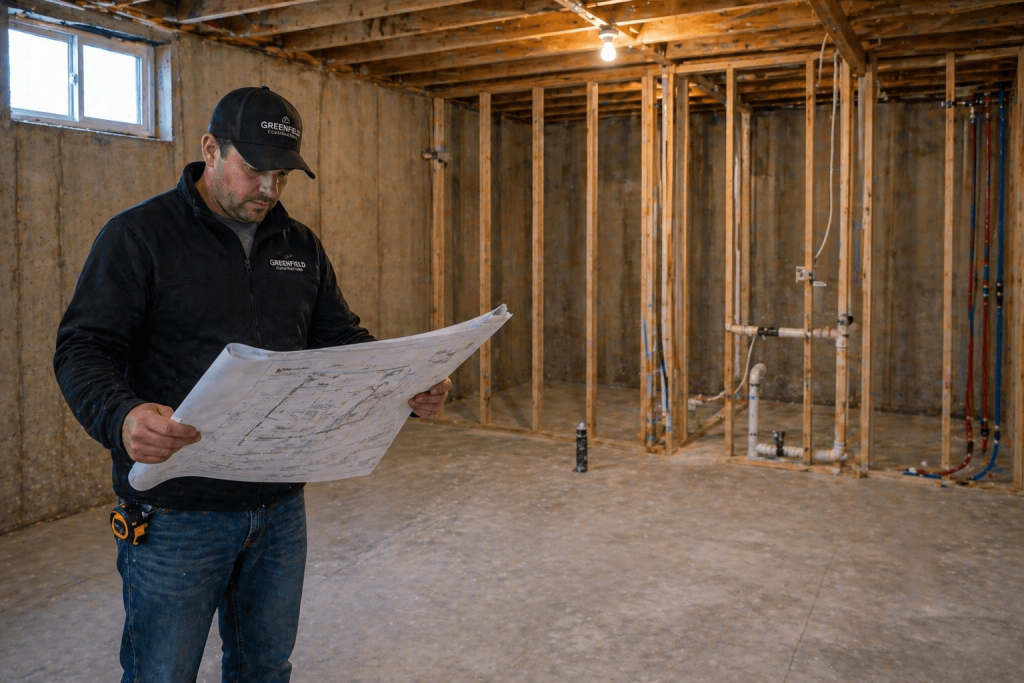
You’ll also need inspections at the rough-in stage (before the walls close up) and again at final completion. Your contractor should handle the permit applications, but it’s worth asking upfront to make sure they’re pulling permits properly.
The Cost of Skipping Permits
We get it. Permits feel like a hassle. But skipping them is one of the most expensive mistakes you can make. Unpermitted work can create problems when you sell your home because it shows up during inspections and appraisals. Buyers get nervous, deals fall apart, and you may be forced to tear out finished work so an inspector can verify what’s behind the walls. The $200 to $1,000 you spend on permits is cheap insurance.
Choosing Fixtures and Finishes (and How They Affect Your Budget)
Budget-Friendly Options That Still Look Great
You don’t need to go high-end on a basement bathroom to get a great result. A perfectly good toilet runs $150 to $400, a simple pedestal or vanity sink costs $200 to $600, and a basic acrylic shower stall can be installed for $800 to $2,000. These are solid, durable fixtures that look clean and modern without breaking the bank.
Where to Splurge and Where to Save
If you’re going to spend more somewhere, put it into the shower. A tiled walk-in shower costs more ($3,000 to $6,000) but it looks substantially better and lasts longer than a prefab unit. On the flip side, you can save on things like towel bars, mirrors, and paint colors without anyone noticing the difference.

Layout and Location: How Your Basement’s Setup Affects Cost
Building Near Existing Plumbing vs. Starting from Scratch
This is the single biggest factor in your final cost. If you can position your basement bathroom directly below an existing first-floor bathroom, you’ll save $1,000 to $3,000 on plumbing alone because the drain lines and vent stacks are already right there. Building a bathroom on the far side of the basement, away from any existing plumbing, means longer pipe runs, more concrete cutting, and a higher bill.
Ceiling Height and Egress Considerations
Maryland building code requires a minimum ceiling height of 7 feet in a bathroom. Most basements meet this requirement, but if yours has low ductwork, bulkheads, or exposed beams, you may need to work around those obstructions or reroute them. That can add $500 to $2,000 to the project depending on the complexity.
How Long Does a Basement Bathroom Addition Take?
A typical basement bathroom addition takes 2 to 4 weeks from demolition to final inspection. A half-bath on the simpler end might be done in 10 to 14 days. A full bath with custom tile work can stretch to 4 to 6 weeks. Weather doesn’t affect the timeline (you’re indoors), but permit processing and inspection scheduling can add a few days on either end.
Does a Basement Bathroom Increase Home Value?
Yes, and it’s one of the best value-adds in any basement project. A basement bathroom typically recoups 60 to 70% of its cost at resale, and that number often goes higher in competitive Maryland markets. More importantly, a finished basement without a bathroom is significantly less functional than one with a bathroom, which limits its appeal to buyers.
Homeowners in Fulton, MD and University Park, MD adding basement bathrooms consistently see this play out when they sell. A basement with a bedroom and full bath can be marketed as an additional living suite, which carries a lot more weight with buyers than a simple rec room.
Common Mistakes to Avoid When Adding a Basement Bathroom
Over the years, we’ve seen a handful of mistakes come up again and again. Skipping the ejector pump to save money (it doesn’t work without one). Choosing the cheapest contractor and ending up with plumbing that leaks behind finished walls. Forgetting to add a ventilation fan, which leads to moisture problems and mold. Not waterproofing the bathroom floor and walls before tiling. And the big one: not pulling permits, which creates headaches at resale.
All of these are avoidable with a little planning and the right contractor. The cheapest option upfront is rarely the cheapest option in the long run.
How to Budget for Your Basement Bathroom Project
Here’s a realistic budgeting framework. Start with the type of bathroom you want (half or full) and use the ranges we’ve discussed as your baseline. Then add 10 to 15% as a contingency for unexpected issues like old plumbing, moisture problems, or code-required upgrades. Get at least three detailed, written estimates from licensed contractors, and make sure each estimate breaks out the ejector pump, permits, and rough-in plumbing as separate line items so you can compare apples to apples.
A solid budget for a full basement bathroom in the greater Maryland area looks something like this: rough-in plumbing ($2,000 to $5,000), ejector pump ($1,000 to $3,000), fixtures and finishes ($2,000 to $8,000), electrical ($500 to $1,500), drywall and paint ($1,000 to $2,500), flooring ($500 to $2,000), ventilation ($300 to $800), and permits ($200 to $1,000). That puts you in the $7,500 to $23,800 range for a half-bath and $15,000 to $40,000+ for a full bath.
Final Thoughts on the Cost to Add a Bathroom to Your Basement
Adding a bathroom to your basement is one of those projects that pays for itself in daily convenience and long-term home value. The cost to add a bathroom to your basement ranges from $8,000 to $40,000 depending on whether you’re building a half-bath or a full bath, how far you are from existing plumbing, and the level of finishes you choose.
The key is understanding the non-negotiables (ejector pump, permits, proper rough-in plumbing) and building those into your budget from day one. Skip the shortcuts, hire a licensed contractor who pulls permits, and you’ll end up with a basement bathroom that works perfectly and adds real value to your home for years to come.